


![WAEC BIOLOGY Past Questions & Answers 2019 - [01]](https://www.degemlife.com/media/k2/items/cache/867519228d1d5325856fc61d710ded0e_XL.jpg)




Asaaseaban is a popular online newsportal and going source for technical and digital content for its influential audience around the globe. You can reach us via email or phone.
+(233) 504-040-918
info@asaaseaban.com


Accra Great Olympics skipper, Gladson Awako has proved to be the truth and the fact of the matter as the current most player of the Ghana Premier League. No midfielder comes close to Gladson Awako in terms of technical intelligence, effective skill and amazing display and experience in getting goals.
The amazing star has over taken 35-year-old Asamoah ‘Baby Jet’ Gyan as the current most attractive player in the Ghana Premier League. He has scored against all the so called big clubs.
He is the most creative player to watch in the GPL.
He is ahead of Medeama SC midfielder Justice Blay, Asante Kotoko goalie Felix Annan who was named SWAG Best Footballer, Aduana strikerYahaya Mohammed, Patrick Razak of Accra Hearts of Oak, Kotoko’s Brazilian Fabio Gama and Emmanuel Gyamfi who were contenders to the player football fans want to watch.
Awako, born on December 31, 1990 (age 30 years) and stands at 1.67 m is miles ahead of this generation. He was a member of the golden group of the 2009 All conquering Under 20 team. He was also a member of the glory days of that Heart of Lions team. He was also a member of the Berekum Chelsea team that made shocking waves in that CAF Champions League campaign.
Awako played for African strong club, TP Mazembe. helping them to win the CAF Champions League, CAF Confederations Cup, CAF Super Cup and was a member of the team that qualified to the finals of the World Club Championship which TP Mazembe lost to Inter Milan.
He is the real inspiration to players who wish to return to the local league, after seeking for greener pastures, and he has set and upgrading the standards.
By Sammy Heywood Okine
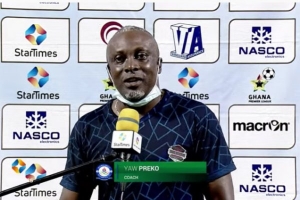
Our game plan worked against Hearts – Olympic Coach Yaw Preko
Yaw Preko Interim Head Coach of Accra Great Olympics has said his tactics against Hearts of Oak worked to perfection hence their 2-0 victory in the 'Ga Mashie' derby at the Accra Sports Stadium on Saturday.
A sublime free-kick from Captain Gladson Awako and perfectly placed strike by Maxwell Abbey ensured victory for the Wonder Club and moved them into the top four of the league standings.
According to the experienced coach, he had studied the play of Hearts in recent matches and decided to devise a different strategy other than the usual.
"We had a game plan for them and it worked. We decided to take the pressure of the boys in this derby game. I told them to relax and enjoy the game and come to the party, hit them in the first twenty minutes and we, fortunately, scored two goals within that time.
"I watched Hearts against Bechem and I realised they are more compact in the middle with the lateral wingers doing lots of runs, so I decided to play the back three and it works for us," he said at a press conference.
When asked about what the win meant for him as a former player of Hearts, Preko responded, "I respect Hearts of Oak because I played for them and coached them as well and they do have a lot of quality players and always do want to possess the ball but my focus was to go into this match and do my job as a professional and I know what a derby is all about."
He added, "It is a long season just like a marathon and winning this match is important as any other match so we have to go back to the drawing board and prepare for our next match."
Great Olympics would face off against King Faisal on Wednesday at the Accra Sports Stadium and could go top with a win if results elsewhere favour them.
GNA
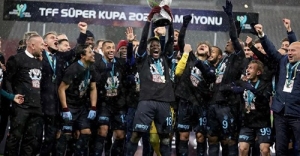
Caleb Ekuban continued with his impressive scoring form for Trabzonspor as they inflicted a 2-1 win over Istanbul Basaksehir to clinch the Turkish Super Cup.
The Ghanaian international scored what proved to be the match winner on the 85th minute to secure their ninth super cup trophy.
Following a barren first half, Jorge Djaniny fired home the opener two minutes after recess before ex-Chelsea and Newcastle United forward Demba Ba scored the leveller on the 58th minute via a spot kick.
However, Caleb emerged the match hero with his late strike to record his 7th goal of the campaign in 15 games.
Source - sportsafric.com
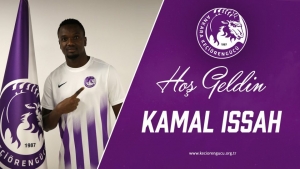
Turkish First League side Ankara Keçiorengucu SK has officially announced the signing of Ghanaian midfielder Kamal Issah in the ongoing transfer window.
The former Liberty Professionals player agreed to a year and half deal with the Ankara based side from Instanbulspor scoring 2 goals in 10 appearances in the ongoing 2020/21 Turkish league.
The club announced on their twitter handle;
WELCOME KAMAL ISSAH
Our Ankara Keçiörengücü signed a 1.5-year contract with 29-year-old Ghanaian midfielder Kamal Issah.
The 29-year-old previously had stints with for Stade Rennais, FC Nordsjælland, Stabæk Football, Genclerbirligi , Eskisehirspor among others.
Source - sportsafric.com
Musah Mohammed was a member of the 2019 Ghana U17 national team
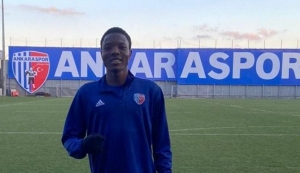
Turkish second-tier side Ankaraspor have signed Ghana youth international Musah Mohammed.
He put pen-to-paper to a four-and-a-half-year deal.
The centre-back has been transferred by Sunyani-based Division Two side Bectero FC.
Mohammed moved to Turkey last year and trained with U19 sides of Fenerbache and Antalayspor.
The 19-year-old was a member of the 2019 Ghana U17 national team.
GHANASoccernet.com
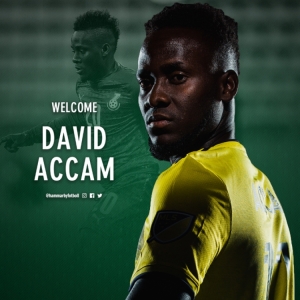
Nashville SC have loaned forward David Accam to Hammarby IF Fotbollförening of Sweden’s Allsvenskan for 12 months with the option to buy, the club announced Thursday.
The 30-year-old’s late goal secured the first win in club history, 1-0 win over FC Dallas on August 12, 2020 and appeared in seven matches with a pair of starts.
The Ghanaian scored 41 goals in 131 MLS appearances in six seasons, playing for Chicago Fire FC, Philadelphia Union, Columbus Crew and Nashville SC.
Accam started his professional career with Swedish club Osterunds FK in 2012.
He spent just five months with Osterunds before moving to Swedish giants Helsingborgs IF, where he scored 30 goals in 62 league appearances and an additional eight goals in 11 cup matches. He made a pair of Champions League and Europa League appearances with the club.
Source - sportsafric.com
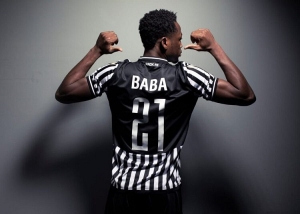
Ghanaian International Baba Abdul Rahman has completed a loan move to Greek side PAOK until the end of the season.
The 26-year old defender joins the Greek top-flight side on loan from Chelsea after failing to break into this first team under both Frank Lampard and Thomas Tuchel.
Baba Rahman has been hit with major injuries which has affected his game time in the Premier League.
This is the 5th time the left back has been sent on loan since signing for Chelsea in 2015 from Ausburg in the German Bundesliga.
PAOK Thessaloniki are lying 4th on the league log with 36points after 19 games in the Greece Super League.
The former Ausburg player will wear the 21 shirt at PAOK.
From Sammy Heywood Okine
…Top Star Gladson Awako nets spectacular free-kick for Olympics
Player of the month, skillful and amazing Gladson Awako scored from a direct free-kick on Saturday evening to power the Wonder Club, Accra Great Olympics to a 2-0 victory over local rivals Hearts of Oak in the 11th week Ghana Premier League fixture.
Great Olympics, the football club with most accolade in the world played as the away team at the Accra Sports Stadium, but were so confident and really exposed the Phobians.
In a game where Hearts of Oak had a good start, the team could not capitalize to score an early goal, allowing the visitors to grow in confidence as the game progressed.
Olympics had a freekick in the 13th minute and the attacking midfielder, Gladson Awako stepped up and stunningly converted to expertly shoot his team into the lead.
Despite a good response from Hearts of Oak, the Dade Boys would go on to make it 2-0 three minutes later through rising star winger Maxwell Abbey who volleyed his none drop effort into the back of the net of the Phobians.
Throughout the pulsating encounter that ensued from there on, Hearts of Oak enjoyed the better of possession and created a good number of chances but could not score as the technical ideas of young coaches Yaw Preko, Godwin Attram and Olele Kingson worked to perfection.
They also had massive support from welfare manager, George Alhasan and an inspiring management who were hungry for success.
In the end, Great Olympics has held on to win 2-0 to ensure they bag the maximum three points.
Hearts of Oak aka ‘The Phobians’ have dropped to sixth on the Ghana Premier League table while Great Olympics move up to the third spot.
Hearts Serbian coach Papic really has to work on his defence especially the goalkeeping are as Richard Aryee has not proved his worth as leading goalie of the glorious club. He was honest however in defeat to say Oly were destined to win the day.
From Sammy Heywood Okine
Matters Arising (II)
By Magnus RexDanquah
Land Economist, SportBusiness Consultant, Bid Architect & Manager for CAN 2008 Tournament and 13th African Games Ghana 2023
I have a very strong conviction that Manifesto-based campaigns will, to a large extent, determine our future elections in Ghana. Taking a cue from the happenings of the 2020 Elections, I believe that whichever party wins any future elections will be as a result that that Party was able to deliver most on the promises made during their previous stay in power.
Indeed, it is for this reason that I find this exercise of reiterating the Agenda for Ghana Sport (2021 – 2024) critical to the transformation of sport into an emerging industry so that Manifestos without performance cease to be business as usual after each 4-year elections.
The outstanding issues of the National Sport Policy and the National Sport Fund, for me, obviously occupy the topmost place on the list of the matters arising of the Agenda and why, considering the work done so far, the two ought to be operationalized by the end of the first quarter of this year, March 2021.
JUSTIFICATION FOR NEW YOUTH RESOURCE CENTRES
The last four years witnessed massive investments in the provision of Youth Resource Centres for the then ten (10) regions of the country plus the planned six (6) for the new regions created – North East, Savannah, Western North, Bono, Bono East and Oti regions.
The first ten (10) Centres being financed by the National Youth Authority (NYA) are Dormaa (Brong Ahafo Region), Wa (Upper West Region), Dunkwa-on-Offin (Central Region), Ho (Volta Region), Koforidua (Eastern Region), Nyinahini (Ashanti Region), Azumah Nelson Sports Complex, Kaneshie (Greater Accra Region), Yendi (Northern Region), Navrongo (Upper East Region) and Axim (Western Region).
The next six (6) new Centres to be constructed as part of the second phase shall comprise Dambai (Oti Region), Damongo (Savannah Region), Nalerigu (North West Region), Techiman (Bono East Region), Goaso (Ahafo Region) and Sefwi Wiawso (Western North Region).
There are also plans to complete the New Edubiase as well as the University of Ghana Sports stadia as part of the next phase of the overall project concept.
The project matrix involves 5,000-seater mini-stadium facilities, when completed, and comprising an 8-lane athletic track, a FIFA standard pitch, a career counselling centre, basketball and handball courts as well as a multi-purpose sport hall, a restaurant and an ICT centre.
Originally, each centre was estimated to cost one million, eight hundred thousand US Dollars (US$1.8 million) with the projects expected to be completed in nine (9) months. Indeed, for the first four (4), they are expected to be handed over by next month, February this year, 2021.
Again, granted normal variations in the construction industry against the impact of the COVID – 19 generally, I expect the final costs of each centre to rise up to almost three million, one hundred thousand US Dollars (USD$3.1 million) per centre, especially for the quality of the tartan tracks to be used and other accessories. Evermore will be the usual adjustments for inflation to give us a total cost of forty-nine million, six hundred thousand US Dollars (USD$49.6 million) for the sixteen (16) Centres.
The Ministry of Finance, mindful of all the talk of ‘wastes’ in relation to the management of all sports facilities built since 2007 or refurbished severally since 1963 when Ghana hosted the first Cup of African Nations, directed in June 2019 that henceforth amongst other documentations to be required, the Ministry of Youth and Sports should submit a BUSINESS PLAN FOR THE MANAGEMENT OF ANY NEW OR TO-BE-REFURBISHED SPORT FACILITY as a matter of necessity.
The compulsive need for the Business Plan for each facility is to identify as well as consolidate all the revenue generating avenues against the cost of the projects plus annual operational expenses; and this should be the cardinal basis for the selection of actual sites / cities’ choices. In such instances, it might even emerge that a different town or city could have been the most profitable option than what had been chosen for very good reasons – such as more central to the catchment areas for both talents and spectators for more commercial viability.
I want to believe that routing these new ‘pseudo’ Youth Resource Centres (or rather sports facilities) through the funding from the National Youth Authority (NYA) was not to avoid subjecting their payment approval processes to the requirements of the Ministry of Finance; not forgetting that the source of the funding is the NYA’s share of the District Assemblies Common Fund (DACF), and therefore from the Central Government.
I recall with some trepidation an advert placed by the National Sports Authority (NSA) that it has received financial clearance to recruit staff to augment and fill vacancies to oversee the management of the new stadia across the country.
The long list of the available positions included coaches – all disciplines, sports development officers, finance officers / accountants, IT officers, Public Relations officers, Marketing officers, Estate officers, Facility Managers, Administrative officers, human resource officers, physiotherapists, procurement officers, storekeepers, technical officers, technician engineers, Engineers, internal auditors, secretaries, security officers and safety officers. If it isn’t the usual JOBS FOR THE BOYS AFTER EACH ELECTIONS, my considered approach would definitely have been much different.
If the Ministry of Finance demands an appropriate SUSTAINABILITY PLAN for each facility within the MMDA concept as engines of growth and development for the announced cities / towns, then the exercise does not mean loading the facilities with all kinds of manpower, without recourse to the appropriate business plans, which have not been formulated or crafted for each venue.
It is important to recognize that if we are to continue on this tangent to build more youth resource centres for many more cities / towns, to mean a second for each region in future, then the sustainability model would be necessary, even in the initial stages of the project.
I want to recall with nostalgia some of the earlier facilities developed for our local football leagues like the Kaladan Park in Tamale, Gyandu Park in Sekondi, Siwdu (later Robert Mensah Stadium) & Victoria Parks - both in Cape Coast, Coronation Park in Sunyani, GHAPOHA Park in Tema, Rovers Park at Tafo, Jackson Park at Kumasi, and the Swedru Park – all these facilities now belong to history.
Definitely, I am a bit worried especially where I had done an evaluation exercise over two (2) major stadia – one newly built at Essipon, Sekondi and another refurbished – the Baba Yara Stadium at Kumasi for CAN 2008 Fiesta; and coming to the conclusion, as various public discussions have also alluded to in the past, that it is about time to privatize stadia management in Ghana for very tangible returns on investments and other cogent reasons.
Otherwise, the almost fifty million dollars (USD$50.0 million) to be used for constructing the sixteen (16) Youth Resource Centres might turn out, seemingly as a waste as the funds used for the four (4) facilities used for the 26th Africa Cup of Nations, Ghana 2008 have become – as a result of poor facility management.
MANAGEMENT OF EXISTING FACILITIES & SUSTAINABILITY
Ghana’s hosting of the 26th MTN Africa Cup of Nations 2008 afforded the country the opportunity to remodel two existing stadia – Accra and Baba Yara (Kumasi) plus two new stadia at Essipon, Sekondi and Tamale.
In addition, we also provided a number of training pitches, which were located at educational institutions as part of the legacies of hosting the CAN 2008 including Fijai SHS (Sekondi), Tamale SHS, NOBESCO (Tamale), PRESEC (Accra), Achimota SHS (Accra), ATTC (Accra), Prempeh SHS (Kumasi), Opoku Ware SHS (Kumasi) and Wesley College (Kumasi).
Even before the hugely successful hosting and organization of the CAN 2008 had ended with the final match, staff of the then National Sports Council were up in arms against privatization of the management of the four (4) main stadia used for the tournament at great costs.
Indeed, the Report submitted by the Local Organizing Committee (LOC) under my watch was extensive in the way forward for their management to accrue revenues estimated in excess of two million, five hundred thousand US dollars (USD$2.5 million) per annum for both Essipon & Tamale (Aliu Mahama) stadia; and estimated revenues in excess of six million US dollars (USD$6.0 million) per annum for both Accra & Kumasi (Baba Yara) stadia.
This means that for the last twelve (12) years post-CAN 2008, the possible estimated accruals we would have enjoyed as a nation would have been a gross thirty million US Dollars (USD$30.0 million) for both Essipon & Tamale stadia; whilst Accra and Kumasi facilities would each have earned a gross seventy-two million US Dollars (USD$72.0 million) over the same period. Granted that these sums would have been abated for management, including periodic maintenance costs with all consultancies by say, forty-five per centum (45%), the estimated total accruals to be paid to the Ministry of Finance through the MOYS from 2008 to 2020 for the four (4) facilities under private management would have been ninety-one million, eight hundred thousand US Dollars (USD$91.8 million).
Unfortunately, whilst we have been denied this quantum of revenue over the last twelve years, the Ministry of Finance have had to provide some money to the rehabilitation of both the Accra and Cape Coast Stadia to enable Ghana host the 11th Women’s Africa Cup of Nations (AFCON) in 2018, whilst additional sums amounting to about fifty million Ghana Cedis (GH₵50.0 million).
What is even worse is the extent we have allowed the facilities to deteriorate in value to the extent that using the Depreciation Replacement Cost Method, the current market value of the Baba Yara Stadium, Kumasi stands at twenty-eight million and forty thousand US Dollars (USD$28.040 million) and the Essipon Stadium, Sekondi has twenty-five million, six hundred thousand US Dollars (USD$25.6 million).
It cost the State about forty million US Dollars (USD$40.0 million) to remodel the Kumasi Stadium for CAN 2008; thus just the cost of the remodeling against its current market value shows a depreciation of thirty per centum (30%) after eleven years of disrepair.
For the Essipon Stadium, constructed at about fifty million US Dollars (USD$50.0 million), when set against its current market value, shows a depreciation of forty-nine per centum (49%) also after about eleven years of gross disrepair.
The gravity of what faces the new Minister, would require urgent engagement of Cabinet to decouple management of the facilities from the core mandate of the National Sports Authority and to privatize their management because the Central Government cannot continue on this path. It is mind-boggling that as you read this piece, the Ministry of Finance has committed to various millions of Ghana Cedis for awards of contracts for the renovations of the four (4) stadia – Accra, Kumasi, Essipon and Tamale.
There is a certain myth surrounding the insistence of the National Sports Authority (NSA) to be managers of all these facilities by all means possible. The Sports Act 2016 (Act 934) only proffers a direction for the implementation of any Sustainability / Business Plan for the management of all sports facilities. I will therefore recommend the following clauses for the reading of any interested party – 3 (g); 3 (h); 21 (c); 25 (c) (iii), and 25 (k); whilst it would also be interesting for us to consider REGULATIONS, Section 29 (1), where the Minister, may by legislative instrument, make Regulations, amongst others –
It means that the time to privatize the management of sports facilities in the country is now, considering the Len Clay Stadium at Obuasi.
There are several revenue sources to make the privatization exercise successful, definitely a WIN – WIN situation for all parties, the MOYS, the NSA and the private investor or facility management firm.
One serious option for any SUSTAINABILITY PLAN shall include the option of NAMING RIGHTS for any stadium – Kumasi could earn an annual fee of one million, three hundred thousand US Dollars (USD$1.3 million), whilst Essipon could command half a million US Dollars (USD$0.5 million) per annum.
Worse still is the number of commercial multiple-user option including the Corporate Boxes (we charged hundred thousand US Dollars for each box in Accra and Kumasi) and that at both Essipon and Tamale Stadia, there are a 46 (forty-six) room hotel space available with eight (8) concession terraces at both south and north stands which could be added to the hotel space for their general setup for an annual rental of two hundred and fifty thousand US Dollars (USD$250,000.00).
We CANNOT CONTINUE TO PLAY OSTRICH forever because we are afraid to lose a certain control over something that you have continuously failed at its management over the last how many years, maybe when Ghana hosted the 1978 AFCON, it is about time we take the bull by the horn as MEN to explore new ways of handling for instance STADIA MANAGEMENT in this country.
It is so, so unfortunate that we have travelled and continue to travel to other countries and marvel at how others are able to get it right and come back home to wallow in the same old way?
Do you know we went to great lengths to remodel and build the Hockey Stadium with water-based astro-turf so we could promote and sustain HOCKEY TOURISM in Ghana after we hosted and organized the 9th AfHF African Cup of Nations in 2009 with a 64-bed Hostel to camp players from abroad who were interested in camping in Accra before major continental or global tournaments? And yet, what do we see, the hostel occupied by students of different sort and facility totally rundown after 11 years?
I will never be tempted to ask if it is a CURSE because I know for a fact that we are more than capable to turn things around when we set our collective minds and wills to same, devoid of personal interests.
Matters Arising (I)
By Magnus RexDanquah
Land Economist, SportBusiness Consultant, Bid Architect & Manager for CAN 2008 and 13th African Games Ghana 2023
THE 2020 Presidential and Parliamentary Elections brought to the fore for the very first time in the 4th Republican Dispensation, the CLASH OF MANIFESTOS, where the citizenry had been engaged to discuss the two manifestos of the two main political parties. For that matter, the sport pages of the two documentations received special attention from the Sportswriters Association of Ghana (SWAG) officially and its membership individually, the various media houses – radio, television and social media and the public, especially those who participate in all sports discussion programmes.
What I have tasked myself to do is to define the tasks ahead of whoever gets the nod as the substantive Minister for Youth and Sports to direct and manage the affairs of Ghana Sport for the next four years (2021-2024).
This assignment is very critical for laying proper take-off of SPORT AS AN EMERGING INDUSTRY with the capacity to support the growth of Ghana’s economy.
What I will set myself to do within the parameters of this article is to set the AGENDA FOR GHANA SPORT for the period 2021 – 2024 term of office, highlighting all the outstanding major issues as well as those actions which are necessary to facilitate the desired take-off.
NATIONAL SPORT POLICY
One of the most recurring paradoxes of the Ministry of Youth and Sports over the last three decades or more has been the failure of the various quests or attempts to craft a National Sports Policy for the nation over the past three decades and more.
I recall efforts by Zaya Yeebo, the 2nd PNDC Secretary for Youth and Sports (1982-1983) who sought to consider all facets of sports development within a revolutionary context to the extent that there was a 3-day event held at the British Council Hall charged with evolving a Policy Directive for the Ministry. Zaya Yeebo succeeded Nii Anyetei Kwakwranya who was the PNDC Secretary for Culture and Sports (1981-1982).
How can I forget the late Ato Austin, also a PNDC Secretary for Youth and Sports (1986-1988) – his tenure witnessed the setting up of the Ben Eghan Junior Committee for Sports Development. An accomplished sportsman during his school days and an astute administrator, the late Austin’s team to deliver the requisite blueprint necessary for an accelerated change for Ghana Sport included Prof. Kwesi Yankah, current Minister of State at the Ministry of Education. The Committee submitted its very well packaged Report to the PNDC Secretary but it was relegated to the back-burner when he was reshuffled to Cape Coast and that was the end of that exercise.
I, again, recall the efforts of Hon. Kwame Saarah-Mensah (a national hockey star) during whose tenure also as PNDC Secretary for Youth and Sports (1988-1991), my agency, RICS Consult Limited (then Rex-Image Associates) started organizing the Annual Ohene Djan Lectures in memory of the first Director of the Central Organisation of Sports (COS) and also as a precursor to redefining how sports could be developed, managed and promoted as a tool for national re-engineering for development. This exercise was to evolve into providing a framework for a sports policy that will inform the activities as well as programmes of the National Sports Council as it interfaced with the various Federations and Associations through its Regional Councils.
It would be smack of lack of due recognition if I do not state the efforts of Hon. E. T. Mensah, ex-MP, who was the NDC Minister for Youth and Sports (1993-2001). E. T. as he is affectionately called and known, also set up a number of committees, including one that worked on the WINNEBA DECLARATION to change the face of Ghana Football to launch it on the path of professionalism. He was also the Minister for Youth and Sports to have produced a 39-page NATIONAL SPORTS POLICY document launched in April 1994 under the Supreme Military Council Decree (SMCD) 54 and the Sports Regulations Legislative Instrument (LI) 1088 of 1976.
Obviously both instruments, SMCD 54 and Sports Regulations LI 1088 are moot and of no consequence with the passage of the Sports Act, 2016 (Act 934), which only seeks to establish the National Sports Authority (NSA) with its Regional Offices plus District Sports Desks set within the District Assemblies setting and leaving out some critical issues which should have been legislated by now.
The Ministry under Hon. Isaac Kwame Asiamah, MP set up and inaugurated a National Sports Review Committee, under the Chairmanship of Hon. Curtis Perry Kwabla Okudzeto, Deputy Minister for Youth and Sports. Unfortunately, it was more for showmanship as the Committee was not resourced to execute its terms of reference (TOR) to the extent a member provided refreshments for all meetings as well as some honorarium for a resource person to provide a draft policy framework for the members to input for discussions.
What is important is to recognize and appreciate that the derivable benefits from the formal launching of a Cabinet-approved National Sport Policy this year, 2021 will inure to the goodwill of the Government, the ruling party and the Ministry as they seek to settle the ‘CLASH OF THE MANIFESTOS’ debate of the last 2020 general elections, where both leading parties showcased almost about the same issues in their 2020 Manifestos.
For some strange reason of pride, every Minister at the Ministry has always sought to work at appending his name and signature to such monumental documents, especially a National Sport Policy document, to keep wondering why since the inauguration of the 4th Republican dispensation, all attempts to produce such draft for public engagement and discourse have failed for whatever strange reasons.
Guess, the beauty however of the period was the enacting of the Sports Act, 2016 (Act 934) by the Parliament within the injury time of their sittings to replace the SMCD 54 (1976), including a Retreat Session at the Accra City Hotel to consider the last few salient issues, which the Select Committee on Culture, Youth and Sports thought they added further consultations with specific individuals to bring closure to the exercise as well as meet the timelines.
The Sports Act 934 states inter alia that “it is to be recognized that despite the repeal of the SMCD 54, regulations, by-laws, notices, orders, directions, appointments or any other act lawfully made or done under the repealed enactment and in force immediately before the commencement of this Act shall be considered to have been made or done under this Act and shall continue to have effect until reviewed, cancelled or terminated.”
This places a certain state of urgency on the new Minister for Youth and Sports to begin to actualize those steps leading to the passage of set Regulations, whereby legislative instruments would be passed to deal all aspects of sports administration, promotion and development to strengthen the base for proper take-off for sports as an emerging industry.
This also sets the tone for the operationalization of the kind of future we wish to establish, administer and promote for Ghana Sport, starting with a major stakeholders engagement to discuss and adopt the final draft NATIONAL SPORT POLICY by the end of the first quarter of this year, March 2021.
SUSTAINABLE NATIONAL SPORT FUND
The journey of our several attempts to re-engineer the sustainable financing of sports in Ghana predates the 1st, 2nd and 3rd Republican dispensations, especially as they posed real and seeming threats to Ghana’s rise to shine as the ‘BLACK STAR OF AFRICA & WORLD’ at all international sporting platforms, including the Ghana-Nigeria Friendship, Olympic and Commonwealth (formerly Empire) Games post – Independence to showcase the diversity of our collective sporting prowess in such disciplines as athletics, boxing and football.
During the tenure of the leadership of the late Osagyefo Dr. Kwame Nkrumah, Ghana’s first President for who he was, an athlete himself during his days at Achimota School, his government sought to weaponize Ghana’s participation in all international sporting events; and therefore not efforts were spared to provide finance for sports.
Merging all private and public institutions or sporting associations or federations under one juggernaut, the Central Organisation of Sports (COS) and led by the late ubiquitous Ohene Djan with direct, unfettered access to Osagyefo, the President, funding of sports in all areas, including the upgrading of facilities, formation of the Academicals, scholarships for sportsmen and women did not seem to be a problem.
However, the issues of funding, in any form, have not ceased to become the bane of our nation’s sports development paradigm since the advent of the 4th Republican dispensation, with various succeeding Ministers of Youth and Sports exploring various ways to source new ways of appropriating funds for sports.
Hon. E. T. Mensah, during his tenure tried two failed attempts with the SPORTS ENDOWMENT FUND, which was launched at the then Continental Hotel (now Golden Tulip Hotel) amidst fanfare and pageantry and under the Chairmanship of Sir Sam Jonah of then AngloGoldAshanti Ghana Limited; and then the SPORTS DEVELOPMENT FUND, which account was used by the Ministry for sponsorship accruals from the 11th Women’s AFCON 2018. Unfortunately, both laudable attempts failed woefully for the simple reason of management of the both initiatives: control and management, especially disbursements of the funds by the Ministry as against the setting up of an independent body setup specifically to manage same like the GETFund. He, again, considered renaming an existing but amorphous Sportsmen’s Pension Scheme into a Sports Aid Foundation to provide for both present and retired sportsmen and women as the pension scheme was more in name than substance.
In the early days of the late Hon. Osei Kwaku as the Minister for Youth and Sports, he set up the Hon. Joe Aggrey Committee – he was the Deputy Minister for Youth and Sports and former President of the Sportswriters Association of Ghana (SWAG) – to provide a blueprint for Sports Development in Ghana.
Out of the work of the Committee, for which I was a Consultant, a 70-page “PLAN FOR NATIONAL SPORT DEVELOPMENT IN GHANA: Framework For A New Direction for Administration, Organisation, Promotion And Funding” document was submitted to the Ministry.
Truth be told, it was through these engagements that the decision for Ghana to bid for the rights host and organize the African Cup of Nations (CAN) 2008 was mooted from the instrumentality of the late Hon. Osei Kwaku (then MP for Asokwa Constituency, Kumasi), when my agency, RICS Consult Limited was engaged to work on the Bid; hence the LOC Conference Room was named after him.
According to the Plan the objectives of the envisaged National Sport Fund included working towards a self-sustaining structure for fund mobilization, backed by an Act of Parliament to support all aspects of sport development, promotion as well as provide for construction and maintenance of infrastructure.
I also recall the series of engagements led by Hon. Mahama Ayariga, MP and then Minister for Youth and Sports hosted a national conference on sport financing at the Movenpick Hotel in 2014 with an invitation extended to John Barnes of Liverpool FC, UK Premier League as one of the speakers.
Indeed, we have progressed from this narrative as in 2018, Hon. Isaac Kwame Asiamah, MP and Minister for Youth and Sports, set up a Committee under the Chairmanship of his Deputy Minister, Hon. Pius Enam Hadzide to work towards the establishment of a National Sport Fund. The 12-member Committee met a number of times and scheduled a national stakeholders’ consultative forum at the Accra International Conference Centre (AICC) with representation from the Ghana Statistical Service (GSS) and the Attorney-General’s Department. The 1-day forum was carried live on GTV SPORTS+ network.
Thereafter, a sportbusiness expert was engaged to provide consultancy services for a work plan for the final stages of the approval process, which included consultations with the Ministry of Finance – to clear grey areas relating to sources of public funds as contribution to the Fund, Ministry of Communications and the Gaming Commission of Ghana (GCG).
I am reliably informed that the initial Cabinet approval has been secured with a pledge of GH₵5,000,000.00 (five million Ghana Cedis) as seed money for the landmark establishment of a SUSTAINABLE NATIONAL SPORT FUND for Ghana Sport.
What is at issue now and which delayed the formal launch last year before the 2020 General Elections is the age-long management structure paradox – independent and sustainable as the GETFund or tied to the apron strings of the Ministry of Youth and Sports as the Road Fund without the avenues for sustainable revenue generation. The second option should not be acceptable for the Ministry will also see it as a supplementary source of income for various activities, most times unplanned and unbudgeted for.
If the lessons of the failures of the Sports Endowment Fund and the Sports Development Fund of the same Ministry should guide anybody for the way forward then I would definitely recommend a Legislative Instrument or an Act, which will give the Fund all the independence it will require to succeed.
It is imperative that this exercise is completed by the end of the first quarter of the year, March, 2021.
The next issues that the second instalment of the MATTERS ARISING from the AGENDA FOR GHANA SPORT (2021 – 2024) will include looking at the Sports Act 934 vis-à-vis the proper role of the National Sports Authority (NSA) in the overall scheme of sport development in the country; justifications or otherwise of the provision of new sports facilities and the management of the existing major stadia and their sustainability.
The third instalment will also look at the nice initiative of the Ghana Football Association (GFA) to compute Football’s contribution to the Gross Domestic Products – a laudable idea but I will advance reasons why they should join forces with the MOYS, the Ghana Olympic Committee (GOC) and all national federations to deliver this exercise which will reposition Ghana Sport as an emerging industry. I will also look at a proposed 10 - Year Sport Renaissance Plan (2021-2030) and why it is necessary for it to be considered a non-partisan project to relaunch Ghana Sport.
The fourth and final instalment would be the best for the issues it will consider.


Asaaseaban is a popular online newsportal and going source for technical and digital content for its influential audience around the globe. You can reach us via email or phone.
+(233) 504-040-918
info@asaaseaban.com